NY Air Guard's 109th Airlift Wing begins Antarctic science support season
The wings ski-equipped LC-130s are flying in support of Operation Deep Freeze, the Pentagon's annual mission to support Antarctic research stations
SCOTIA, NY (11/18/2026) — The New York Air National Guard's 109th Airlift Wing has begun its 2026-27 Antarctic support season, deploying 75 Airmen and five LC-130 Hercules aircraft to support scientific research operations in Antarctica.
The last aircraft left Stratton Air National Guard Base in Scotia, New York, for the wing's base in Christchurch, New Zealand, Nov. 12.
From November through February, the 109th will participate in Operation Deep Freeze, the Department of War's annual joint military mission supporting the National Science Foundation's U.S. Antarctic Program.
In Antarctica, the 109th operates from McMurdo Station. This National Science Foundation facility, which houses between 1,200 and 1,400 people during the Antarctic summer, is the largest base on the continent.
"For decades, the 109th Airlift Wing has supported Operation Deep Freeze, developing the experience and expertise required to conduct airlift operations in one of the most challenging environments in the world," said Col. Steven Slosek, the 109th Airlift Wing commander.
"While mission requirements evolve each season, our aircrews, maintainers and support personnel continue to demonstrate the specialized skills and capabilities needed to execute complex missions across Antarctica," Slosek said.
This season, the wing will support the decommissioning of West Antarctic Ice Sheet Divide Camp, the relocation of operations to Byrd Camp and the reopening of Siple Dome Camp.
The transition will involve moving infrastructure and equipment from West Antarctic Ice Sheet Divide to Byrd Camp. Siple Dome, where ice core research was previously conducted , will provide aircraft refueling and weather observation services to support aviation operations across West Antarctica. It sits on Siple Dome, an ice dome measuring 60 miles by 60 miles.
Scientists used the West Antarctic Ice Sheet Divide Camp to collect ice cores, which they use to study atmospheric and environmental conditions from Earth's past. The project eventually drilled through more than two miles of ice.
Byrd Camp is a historic deep-field research facility in West Antarctica funded and managed by the National Science Foundation through the U.S. Antarctic Program.
The 109th Airlift Wing operates the Department of War's only ski-equipped LC-130 Hercules aircraft, providing a unique heavy airlift capability that allows crews to land on snow and ice surfaces in remote polar environments.
During the 2025-26 Antarctic support season, the 109th completed 63 missions to South Pole Station, 17 missions to West Antarctic Ice Sheet Divide Camp and nine aeromedical evacuation missions.
Aircrews logged 986 flight hours on the Antarctic continent, transporting 1,086 passengers, 2.6 million pounds of cargo and 1.04 million pounds of fuel throughout the season.
Operation Deep Freeze remains one of the Department of War's most demanding recurring logistical missions, requiring personnel and aircraft to operate in some of the world's most remote and challenging environments.
The 109th Airlift Wing also supports science and military training operations in Greenland, and regularly exercises in the Arctic with the Canadian Forces.
From pole to pole, sand to snow, the 109th Airlift Wing continues to provide specialized heavy airlift capabilities in support of military and scientific operations worldwide.
Media Attachments
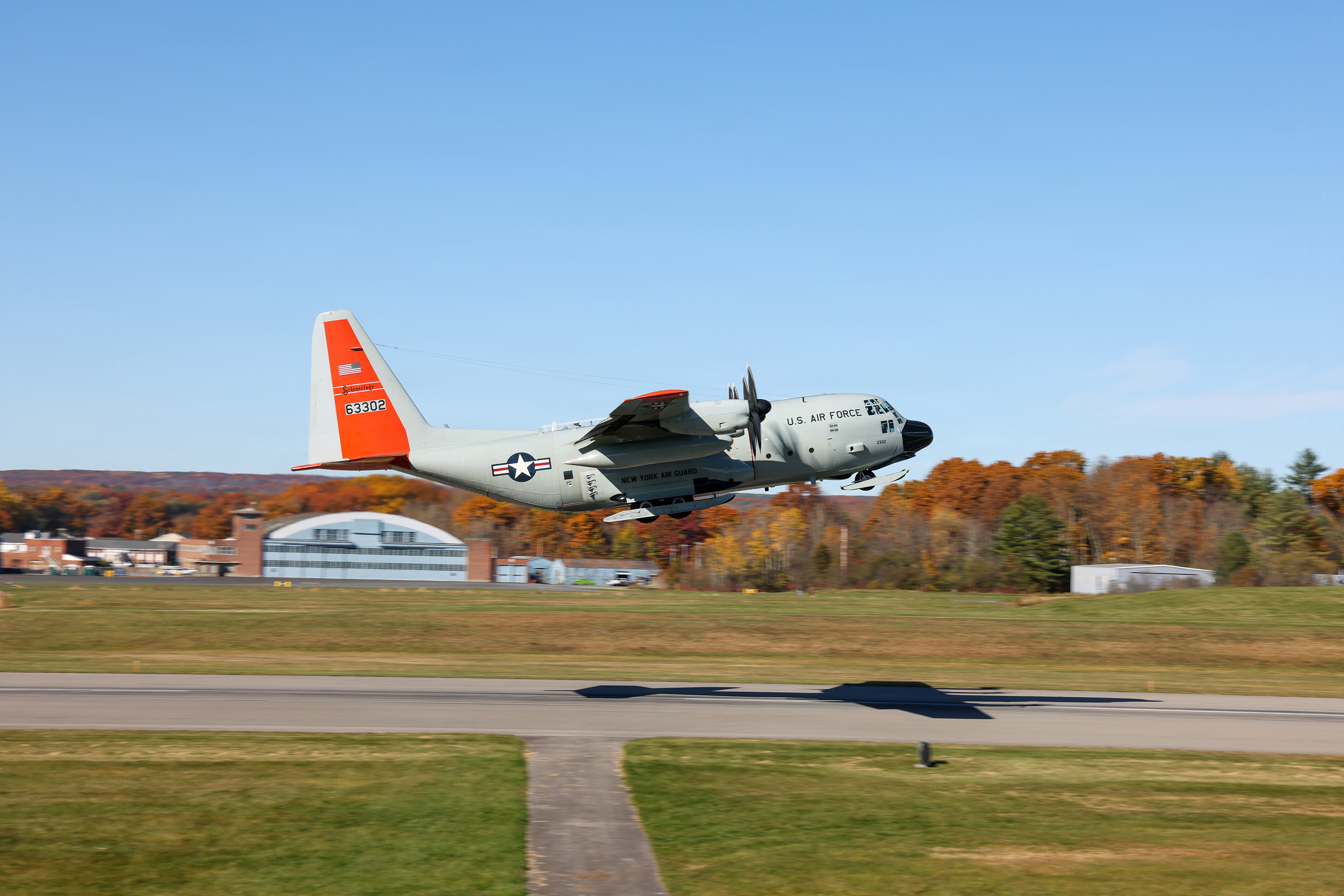
An LC-130 Hercules from the 109th Airlift Wing takes off from Schenectady County Airport, New York, on Oct. 29, 2026 headed for Antarctica. The aircraft launch commenced Operation Deep Freeze 2026-27, the Pentagon's annual support to the National Science Foundation’s Antarctic program. U.S. Air National Guard Photo by Tech. Sgt. Madison Scaringe.